
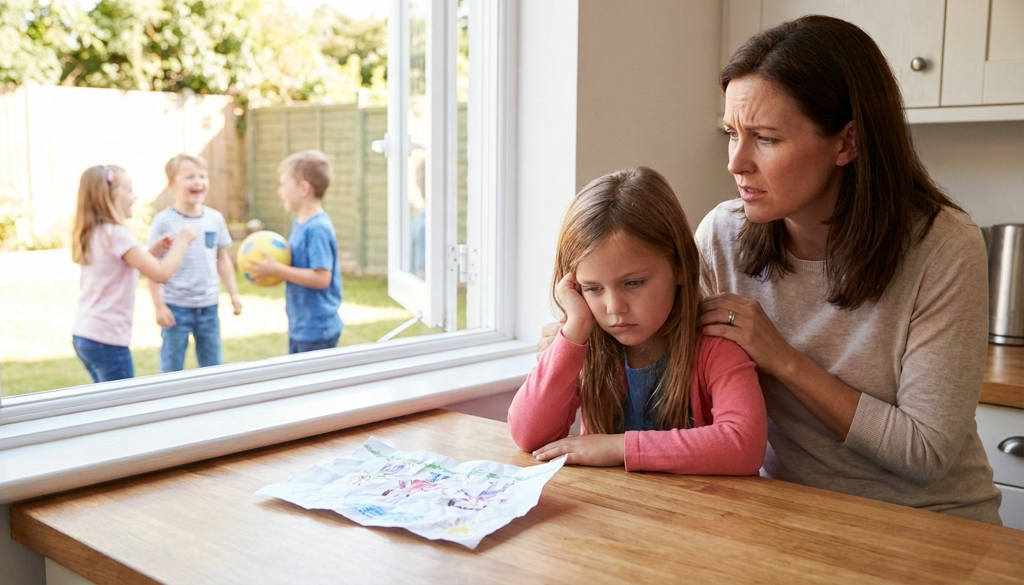
Friendships are often seen as a simple, happy part of childhood, yet for many families they are a source of worry, tears, and emotional exhaustion. Child friendship struggles can show up suddenly and intensely, leaving parents unsure whether to intervene or hold back.
For some children, particularly those with additional needs, friendship challenges can feel constant and deeply personal. Knowing how to support your child without taking away their chance to develop independence is one of the trickiest parts of parenting. This article explores common friendship difficulties and offers guidance on when to step in and when to gently step back.
Why friendship struggles are a normal part of growing up
Friendships in childhood are fluid. Children are learning how to communicate, negotiate, manage disappointment, and understand different perspectives. These skills take time, and missteps are part of the process.
It is very common for children to experience ups and downs in friendships as social groups change, personalities develop, and confidence fluctuates. While this doesn’t make the experience any less painful in the moment, it can help parents to view child friendship struggles as a developmental journey rather than a sign that something is “wrong”.
That said, when friendship difficulties become persistent or start to affect wellbeing, they deserve thoughtful attention.
Exclusion and being left out
Few things hurt as much as being left out. Exclusion might look like your child not being invited to play, watching others form groups without them, or hearing about parties and playdates they were not included in.
Occasional exclusion can happen naturally as children’s interests change. However, repeated exclusion can have a significant impact on self-esteem. Children may begin to question their worth or assume they are unlikeable, even when that isn’t true.
The most important first step is listening. Try to resist minimising the situation or rushing to fix it. Feeling understood and validated helps children feel emotionally safe enough to talk openly.
Fallouts and friendship breakdowns
Friendship fallouts can feel dramatic and final to children, even when adults recognise them as temporary. A disagreement over a game or a misunderstanding in the playground can quickly become a crisis in your child’s world.
While it is tempting to intervene, many fallouts are opportunities for children to practise conflict resolution and emotional regulation. With calm guidance, children can learn that friendships can survive disagreements and that it is possible to repair relationships after things go wrong.
Parents can help by talking through what happened, helping children reflect on feelings, and gently exploring alternative responses for the future.
Social anxiety and friendship worries
Some children want friends desperately but feel overwhelmed by social situations. Social anxiety can make playtime, group work, and social events feel exhausting or frightening.
Children experiencing social anxiety may avoid certain situations, complain of feeling unwell before school, or struggle to initiate conversations. These behaviours are often misunderstood as shyness or stubbornness, when they are actually signs of deep anxiety.
Support works best when it is gradual and compassionate. Encouraging small, manageable social steps while offering reassurance can help children build confidence without feeling pushed beyond their limits.
For deeper support on helping children who find social situations overwhelming, read how to overcome emotionally-based school avoidance together to understand emotional barriers and practical strategies parents can use.
Playtime issues at school
Playtime can be one of the most challenging parts of the school day. Unlike lessons, playtime is unstructured and relies heavily on social understanding, flexibility, and communication.
Many child friendship struggles surface during playtime, particularly for children who find noise, crowds, or unpredictability difficult. Children may want to join in but not know how, or they may struggle when games change rules or friendships shift quickly.
If playtime difficulties are ongoing, it can be helpful to talk with school staff to gain a clearer picture and explore whether additional support or structured activities might help. Equally, understanding the 7 amazing benefits of play that every parent should know can help you see why unstructured interactions and group play are essential for friendship development.
What is bullying and what is not?
It is natural for parents to worry about bullying, but not all unkind behaviour is bullying. Bullying usually involves repeated behaviour, an intention to hurt, and a power imbalance. There is a well-known acronym for identifying bullying: STOP (Several Times On Purpose). If the behaviour happens many times and it is clearly being done on purpose, then it counts as bullying.
One-off arguments, falling out with friends, or mutual disagreements are upsetting but are not bullying. Understanding this distinction can help parents respond proportionately and effectively.
If bullying is suspected, stepping in is appropriate. Children should not be expected to manage bullying alone, and schools have a responsibility to address it.
Organisations such as the Anti-Bullying Alliance offer clear guidance on recognising bullying and knowing when to seek help.
Managing play dates and birthday parties
Play dates and birthday parties can be joyful experiences, but they can also amplify anxiety and friendship challenges. For some children, particularly those with SEND or social anxiety, these events can feel overwhelming.
Keeping play dates short, predictable, and calm can make them more manageable. Preparing your child in advance for what to expect and reassuring them that it is okay to leave early can reduce pressure.
Birthday parties can be especially tricky. It is important to remember that not attending every party does not mean your child is failing socially. Sometimes protecting emotional wellbeing is the priority.
Online friendships and digital challenges
As children grow older, friendships increasingly extend into the online world. Online friendships can be meaningful and supportive, but they also come with unique challenges.
Without facial expressions or tone of voice, misunderstandings are common. Children may feel pressure to respond quickly or may experience exclusion through group chats and online games.
Open conversations about kindness, boundaries, and online safety are essential. Let your child know they can come to you if something online feels uncomfortable or upsetting.
For more information on keeping children safe online, the UK Safer Internet Centre provides practical advice for families navigating online friendships and digital boundaries.
Managing relationships with other parents
One of the most delicate aspects of child friendship struggles is navigating relationships with other parents. It can be tempting to step in directly, especially when emotions run high.
However, direct confrontation can sometimes make situations worse. When communication is necessary, staying calm, factual, and child-focused is key. Avoid discussing friendship issues in front of the children, as this can increase tension and anxiety. Try sending clear, simple text messages that can be considered carefully before a reply is due. This can help remove some of the tension that parents can feel.
Often, the most effective approach is focusing on supporting your own child rather than trying to manage the behaviour of others.
When to step in and when to step back
Deciding when to intervene is rarely clear-cut. Stepping in may be necessary if your child is distressed over a prolonged period, if there are signs of bullying, or if anxiety is affecting their wellbeing or school attendance.
Stepping back may be appropriate when difficulties are occasional, developmentally typical, or when your child wants to try handling the situation themselves. Making mistakes in safe situations is an important part of learning. Speaking to your child’s class teacher, either alone or with your child as you see fit, can sometimes help as they can often give you another perspective.
Trust your instincts, but also trust your child’s ability to grow with your support nearby.
Supporting children with SEND and additional needs
Children with SEND often experience child friendship struggles more frequently due to differences in communication, sensory processing, or social understanding. These challenges are not a reflection of effort or desire.
Support may involve explicitly teaching social skills, role-playing tricky situations, or working closely with school staff. Emotional reassurance and acceptance are just as important as practical strategies.
Friendship does not look the same for every child, and that is perfectly okay. You can demonstrate your own friendship differences to your child here – how you may speak to one person every single day and yet another person you only speak to once a year.
You might also find our article SEND children deserve better: find support that works helpful when thinking about how personalised support, such as tailored tutoring, can bolster confidence and friendships for children with additional needs.
Final thoughts for parents
Friendship struggles can trigger strong emotions in parents, especially when they echo our own childhood experiences. Remember that your calm presence, empathy, and belief in your child matter more than having all the answers.
You don’t need to fix every problem. Sometimes the greatest gift is walking alongside your child as they learn, grow, and find friendships that feel safe and meaningful. And talk…talk…talk… it really does make a difference, letting your child know that they are heard.


