
“Both sets of parents told me the same thing: ‘We never saw it coming.’”
They said it with the same expression too – a mix of disbelief, guilt, relief, and grief. These were thoughtful, attentive, well-educated parents. They knew their children deeply. And yet, when the autism diagnosis finally arrived, it still felt like a shock.
Not because the diagnosis was wrong – but because, in hindsight, it made everything make sense.
This article is anchored in those shared moments of shock, and builds outward into why that reaction is so common. Particularly when we’re talking about the missed signs of autism in girls, and the quiet ways neurodivergence can hide in plain sight.
The autism no-one warned us about
When many people picture autism, they still unconsciously picture a particular type of child: disruptive, withdrawn, non-verbal, struggling visibly, usually male. That stereotype is outdated – but it still shapes expectations.
The girls I’m thinking of, and know very well, didn’t fit it at all.
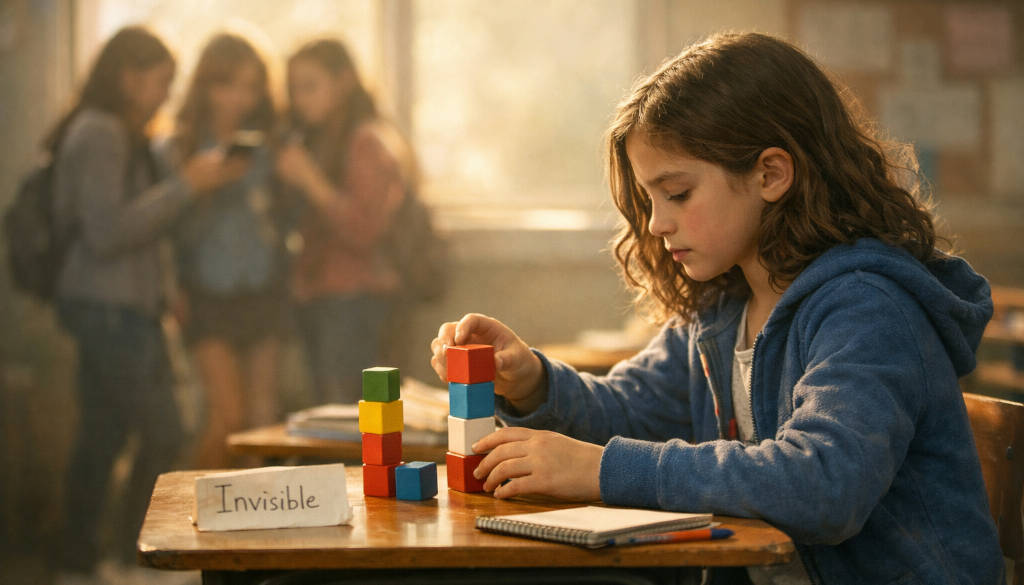
They were coping. Achieving. Verbal. Bright. Polite. Described as “good as gold”. They followed rules, read social cues carefully, and worked incredibly hard to do the right thing.
Teachers weren’t concerned. Friends were present. Reports were glowing.
So how could autism possibly be part of the picture?
The truth is, autism has too often been measured against a narrow, male-centred model. Girls who are compliant, socially observant, and desperate to fit in don’t raise alarm bells. They raise praise.
For parents, this is important to hear clearly: missing it does not mean you failed your child. You were responding to what you were shown – and what you were shown was competence, not struggle.
When autism doesn’t look like autism
One of the most misleading things about autism in girls is that it often shows up sideways.
Instead of obvious social difficulties, you might see anxiety. Instead of classroom meltdowns, emotional explosions at home. Instead of social withdrawal, intense people-pleasing.
Parents often describe girls who:
- Are exhausted after school but “fine” all day
- Hold it together in public and unravel in private
- Copy other children socially rather than intuitively connecting
- Are described as “sensitive”, “highly strung”, or “perfectionistic”
- Feel things deeply and take criticism painfully to heart
These traits are frequently mislabelled as personality, temperament, or simply “being a worrier”.
Girls fit this pattern particularly well – but this presentation isn’t exclusive to gender. Some boys mask too. Some children internalise rather than externalise. What matters is that autism does not always announce itself loudly.
This is why the phrase missed signs of autism in girls resonates so strongly with parents. The signs were there – they just didn’t look like what anyone was told to watch for.
Children whose needs don’t fit obvious stereotypes can often benefit from one-to-one SEND tuition that recognises presentation as well as diagnosis.
The cost of being ‘fine’
This is the part that can feel uncomfortable to sit with.
Many autistic girls are fine – until they’re not.
The coping strategies that carried them through early childhood start to crack under the weight of academic pressure, social complexity, and hormonal change. Masking becomes harder. Exhaustion deepens. Anxiety intensifies.
Parents are often blindsided by a sudden shift:
- A previously confident child withdraws
- School refusal appears seemingly overnight
- Emotional regulation collapses
- Self-esteem plummets
The diagnosis doesn’t arrive because autism has suddenly appeared. It arrives because the energy required to hide it has finally run out.
For families, this reframe matters deeply. The story isn’t “she was fine and then something went wrong”. It’s “she has been working incredibly hard for a very long time”.
Good girls don’t flap
This is where society needs gentle – but firm – challenging.
Girls are still taught, implicitly and explicitly, to be quiet, polite, emotionally aware, and accommodating. To notice how others feel. To smooth over discomfort. To adapt.
These expectations don’t just shape behaviour – they actively hide neurodivergence.
A girl who stims subtly instead of obviously.
A girl who scripts conversations instead of avoiding them.
A girl who suppresses distress until she’s safely at home.
Autism hasn’t changed. Our expectations have.
When we praise girls for being “easy” and “no trouble”, we often reward masking without realising it. And when we do that, autism in girls becomes easier to miss – not because it isn’t there, but because it’s been trained underground.
The parents who say ‘but she’s just like me’
This moment comes up again and again.
A parent listens to the assessment feedback and thinks, That sounds like me. Not in a dismissive way – but in a reflective, sometimes emotional one.
These traits feel familiar. Normal. Even admirable.
That recognition doesn’t invalidate the diagnosis. In fact, it often deepens understanding. Autism in girls has historically been under-recognised across generations. Many adults are only now making sense of their own experiences through their child’s journey.
This realisation can be grounding rather than frightening. It reminds families that autism isn’t something alien that suddenly appeared – it’s part of a shared human spectrum.
Why the shock is so common
When both sets of parents said, “We never saw it coming”, they weren’t saying they weren’t paying attention.
They were saying:
- No one told us what autism could look like in girls
- No one warned us about masking
- No one explained the cost of coping
- No one said that being “good” could be a red flag
And that’s not a parental failure. That’s a systemic one.
The growing conversation around the missed signs of autism in girls isn’t about blame. It’s about clarity. Compassion. And finally giving families the language to understand what they’ve been living with all along.
A final reassurance for parents
If you’re reading this and feeling a knot in your stomach, please hear this clearly:
You didn’t miss autism because you weren’t observant enough.
You missed it because your child was coping – until coping wasn’t sustainable anymore.
Understanding comes when it’s ready. And when it does, it can be the beginning of relief, not regret.
There is plenty of support out there. You just now need to go and find it and begin to reshape the future.


