
A fresh start with your child
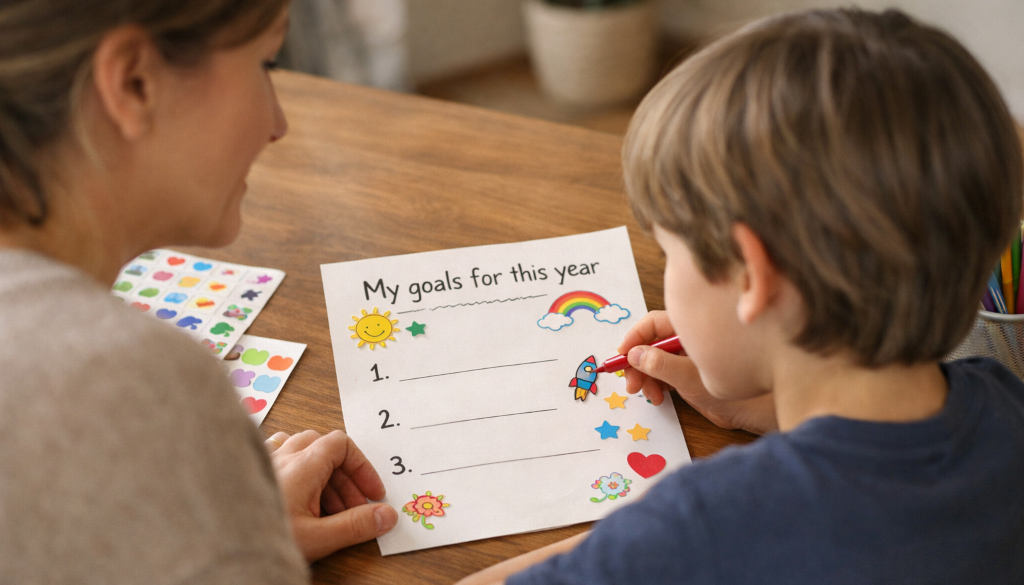
The new year is a fresh canvas…an opportunity for you and your child to set new intentions and make changes. For children, a new year can feel exciting but also a bit daunting. As a parent, it’s important to guide them through this period by focusing on growth, setting achievable goals, and fostering a positive attitude. Together, you can embrace this time to reflect, improve, and create a roadmap for success. Making New Year’s resolutions with your children is a great way to kick-start January. However, making New Year’s resolutions FOR children doesn’t work as well if they aren’t involved. So make sure they have a say!
This year, let’s explore how to help your child navigate new beginnings, from setting thoughtful resolutions to cultivating a positive mindset, fostering healthy friendships, and planning for school success. We’ll include plenty of examples to make the ideas more practical.
Managing new year resolutions with your child
Resolutions can feel overwhelming for both adults and children, especially when the goals are too big or unclear. Instead of asking your child to come up with a broad, overwhelming goal like “get better grades or marks” or “become a great athlete,” help them set smaller, more achievable goals. Involving your child and explaining ‘why’ is a great way to give them ownership – and make them more likely to be successful.
For example, if your child wants to improve in maths, break it down to something specific, such as “complete three maths exercises every evening” or “practise the 3 times table every day for 5 minutes” or “ask for help when I don’t understand something in class.” You could create a chart together to track their progress. This visual representation will help them feel accomplished with each step forward.
If your child’s resolution is to read more books, pick a goal they can easily meet, like “read 10 pages of a book every day” or “finish one chapter each week.” Make it a family activity by setting a reading time where everyone, including you, reads for half an hour. By doing so, you’re setting an example and reinforcing the idea of working toward goals together.
Being positive moving forwards
The new year is the perfect time to help your child cultivate a positive mindset, which can make a significant difference in how they handle challenges. For example, if your child struggles with a particular subject at school, instead of saying, “I’m bad at maths,” encourage them to reframe their thinking: “I’m still learning, and I can improve with practice.”
Let’s say your child comes home feeling upset about a bad test result. Rather than focusing solely on the mark itself, you could encourage them to reflect on the effort they put in. Ask questions like, “What went well in that assignment?” or “What’s one thing you could do differently next time?” This shifts the focus from failure to growth, teaching your child that setbacks are part of learning.
Noticing the effort they are putting in, not just the outcomes, will really support your child’s confidence. Whether it be academically-based, or sports, or friendships, praising effort shows that the journey to success counts too. Research consistently shows that children thrive when positive behaviour is noticed and reinforced. The Child Mind Institute explains how positive attention helps children feel secure, motivated, and more willing to keep trying, even when things feel difficult.
Modelling positivity in your own life is also essential. If you’re dealing with a challenging situation, whether it’s work stress or a personal issue, let your child see how you handle it. For instance, if you’re running late for an appointment, instead of showing frustration, calmly explain how you plan to fix the situation. This will help your child see that challenges can be tackled with a positive, problem-solving mindset.
Inspiring your child to be the best version of themselves
In today’s world, it can be easy for children to get caught up in comparisons or expectations that don’t align with their unique strengths. As a parent, one of the most important things you can do is help your child discover who they are and support them in becoming the best version of themselves.
If your child is passionate about art, encourage them to pursue it, even if it’s not the most “popular” interest at school. For example, you might enroll them in a local art class or supply them with new art supplies to inspire their creativity. Celebrate their growth by displaying their artwork at home, showing them that their individuality is something to be proud of.
On the other hand, if your child enjoys playing sports but struggles with performance, emphasise the value of persistence rather than focusing on winning. You could say, “It’s not about being the best on the team – it’s about doing your best and having fun with your friends.” This way, your child learns that the effort they put in is just as important as the outcome.
Ultimately, teaching your child to believe in their unique abilities can have a lasting effect on their self-esteem and approach to challenges.
Thinking about the next few months at school
The new year often brings a shift in academic expectations. The start of a new term is an opportunity to set academic goals and create a plan to achieve them. Sit down with your child to discuss the subjects they enjoy and the ones they find challenging. For example, if your child loves reading but finds maths difficult, set a goal to read one new book every month while dedicating extra time to studying maths through fun, interactive games or puzzles.
A helpful strategy is to break the school year into smaller, manageable chunks. Encourage your child to set a goal for each month or term. If they struggle with writing essays, for example, they could aim to “write one draft without feeling stressed about getting it perfect” or “work on improving spelling and grammar each week.”
Establishing a homework routine is also key. Create a designated time for homework each day, ensuring your child has everything they need (pens, books, snacks, etc) so they can focus. Consistency will help them stay on track, and they’ll develop good study habits early on. Sounds obvious, but it really does work!
For some children, especially after a break or a challenging term, returning to school can feel overwhelming. They may seem reluctant to go in, complain of tummy aches, or become unusually emotional in the mornings. If your child struggles with attendance or feels overwhelmed, see our tips on how to overcome school avoidance.
Helping your child have a positive impact on others
In addition to personal growth, it’s important for children to learn the value of helping others. Encourage your child to practice kindness in small ways. For example, if your child sees a classmate sitting alone at lunch, suggest they invite them to join the group. Small gestures like this can create a sense of belonging and teach your child the impact of their actions on others.
You might also consider volunteer opportunities as a family. Volunteering at a local food bank or helping clean up a community park can help your child see firsthand how they can contribute to their community. These experiences are valuable lessons in empathy and social responsibility.
As you nurture your child’s desire to help others, remind them that kindness doesn’t always have to be big. It’s the small, consistent acts that make a difference. For instance, encouraging your child to help a sibling with a task or to share their favourite toy with a friend shows them the importance of compassion.
Helping your child with friendships
Friendships are a big part of your child’s life and can sometimes be a source of stress, especially if they’re navigating conflicts or feeling left out. Start by having open conversations about friendships. Ask your child how their friends are doing and what activities they’re enjoying together. If there are any issues, like arguments or feeling excluded, help them understand different perspectives and resolve conflicts with kindness.
For example, if your child is upset about a disagreement with a friend, you could role-play different ways to express their feelings. You might say, “If you want to tell Sarah that you felt hurt by something she said, you could say, ‘I felt upset when…’ instead of ‘You always do this!’” This teaches them to communicate effectively and resolve conflicts peacefully.
Teach your child that the quality of friendships matters more than the quantity. It’s more important to have a few close friends who respect and support them than to try to fit in with a larger group. Encourage them to seek out friends who share their values and interests.
Other thoughts on supporting your child in the new year
Lastly, remember that the new year is a time for strengthening your relationship with your child. This is a great time to make family traditions or set aside more time to be together. Whether it’s a weekend hike, baking together, or playing a board game, these moments will help build a stronger bond and create lasting memories. These experiences also teach your child that success isn’t just about achievements. It’s about the connections we make along the way.
Happy New Year!


