
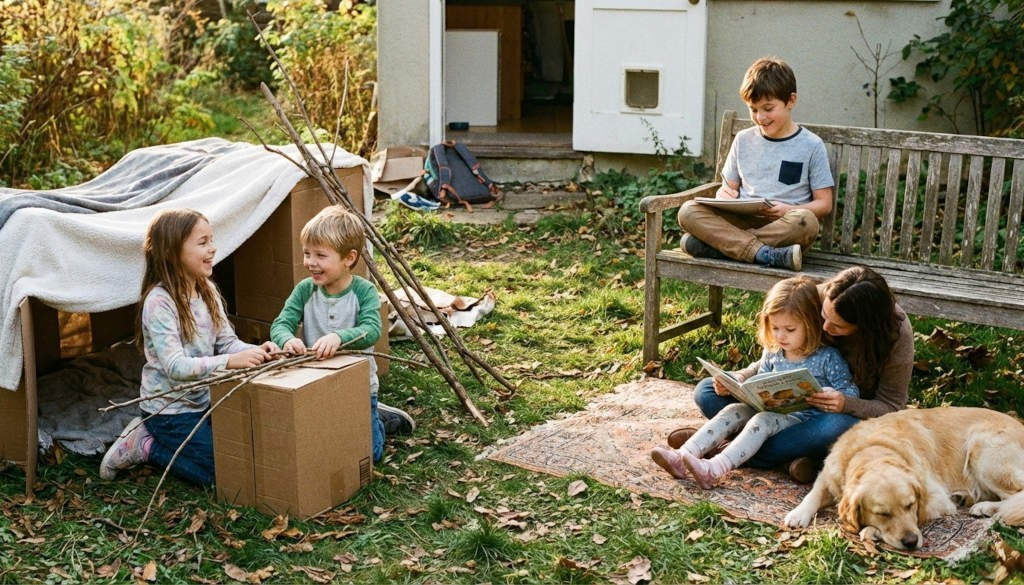
If your child walks through the door after school and seems grumpy, withdrawn, tearful or unusually loud, you are not alone. Many parents worry they are doing something wrong, when in reality this behaviour is often a sign of how hard children are working all day long. This doesn’t only mean academically! Understanding what children need after school can completely change those tricky afternoons and early evenings. From decompression time and food to emotional safety and better conversations, this guide explores what really helps children reset after a demanding school day.
I would also love to hear what works in your home. Every family is different, and shared ideas are incredibly powerful.
The hidden effort of the school day
School asks an enormous amount of children, often far more than we realise. Throughout the day they are expected to concentrate for long periods, follow rules and routines, sit still even when their bodies want to move, manage friendships and social pressures, and constantly process instructions, noise and transitions.
For many children, especially those with additional needs or anxiety, this constant self-regulation uses up every drop of their emotional energy. By the time they get home, the “coping cup” is empty. And you as a parent get to see the full impact of this.
This is why understanding what children need after school starts with recognising just how intense the school day can be.
Why decompression time matters so much
One of the most important things children need after school is decompression time. This is a period where there are no demands, no questions, and no expectations to perform.
Decompression might look different for each child. For some, it is quiet play in their bedroom or drawing, building or role play. For others, it may be time outside moving their body, watching a familiar programme, or simply being silent.
This time allows the nervous system to settle. Without it, children can appear “difficult” or “defiant”, when in fact they are overwhelmed.
A helpful rule of thumb is to allow at least 20–30 minutes of decompression before asking anything of them.
Understanding after-school behaviour
Many parents say, “They hold it together all day and then fall apart at home.” This is very common and is often called after-school restraint collapse.
At school, children are using every ounce of self-control. At home, where they feel safest, those emotions finally spill out. This might look like meltdowns or tears, anger over small things, withdrawal or refusal to talk, or clinginess or regression.
Rather than seeing this as bad behaviour, it helps to see it as a sign of trust. Home is where they feel safe enough to let go. If you’d like more support with this, you may find our article on Effective ways to talk to children about big feelings helpful.
How food can help children reset after school
Food plays a much bigger role in behaviour than many parents realise. By the end of the day, blood sugar levels are often low, which can worsen emotions and reduce patience.
A good after-school snack should include:
- Protein (cheese, yoghurt, eggs, nut butter if safe)
- Complex carbohydrates (wholegrain crackers, fruit, oats)
- Water or milk to rehydrate
Avoiding sugary snacks straight away can help prevent emotional crashes. Think of food as emotional first aid – it helps the brain and body feel safe again. You can always have a snack ready for them as they come out of school, at the gate, if time is short. If you’re unsure what makes a balanced after-school snack, the NHS provides practical advice on healthy snack ideas for children.
The impact of high levels of concentration
Children are expected to concentrate for hours, often with very few breaks. For some, especially those who find learning challenging, this level of focus is exhausting.
High levels of concentration can lead to mental fatigue, reduced emotional regulation, slower processing once children are home, and increased sensitivity to noise or requests.
This is why homework immediately after school can be so difficult. Many children simply do not have the mental energy left.
Emotional safety comes before conversation
One of the most important things children need after school is emotional safety. Before they can talk about their day, they need to feel safe, accepted and unjudged.
In practice, this means resisting the urge to jump in with corrections or solutions, avoiding immediate questions, letting children lead interactions, and staying calm during big emotions.
Children open up when they feel heard, not when they feel interrogated.
Why “How was your day?” often fails
Most parents ask this question with love, but it often gets a one-word answer (“Good!” is a favourite) or complete silence. That is because the question is too big and comes too soon.
After a long day, children may not yet have the words to explain how they feel. Their brains are still processing everything that happened.
Instead of “How was your day?”, try:
- “What made you laugh today?”
- “What was the hardest part of today?”
- “Who did you spend time with at playtime?”
- “Do you want to talk now or later?”
These questions feel safer and easier to answer.
What to ask children when they are ready
Timing matters more than the question itself. Often, children open up later in the evening, at bedtime, or while doing something side by side.
Gentle prompts might sound like: “I noticed you seemed tired today”, “I’m here if you want to talk”, or “That sounds like it was tricky.”
Listening without rushing to fix builds trust and confidence.
Supporting children with additional needs after school
Children with SEND, anxiety, or sensory differences often need even more recovery time after school. The school environment can be overwhelming, even when the day has gone “well”.
Helpful strategies may include:
- Predictable after-school routines
- Reduced social demands
- Sensory activities such as deep pressure or movement
- Extra reassurance and calm
Understanding what children need after school is especially important for these children, as it can prevent burnout and school avoidance.
For children who experience sensory overload, the National Autistic Society offers practical advice for parents on supporting emotional and sensory regulation at home.
Small changes that make a big difference
You do not need to overhaul your entire routine. Small, consistent changes can have a huge impact, such as:
- A calm welcome home
- A reliable snack
- Protected decompression time
- Peace and quiet
- Fewer questions and more listening
These simple adjustments often lead to calmer evenings and happier children.
What children need after school? Every child is different!
There is no single “right” way to support children after school. Some need quiet, others need movement. Some want cuddles, others want space.
Every child deserves to feel understood and supported, especially after long, demanding school days. If you’re finding that afternoons are particularly hard, you may find it helpful to explore why tailored support matters for every child.
I would love to invite you to share: what works in your home after school? Your experience may be exactly what another parent needs to hear.


